
Joy doesn’t need an audience
It's okay if your hobbies are just for your own pleasure

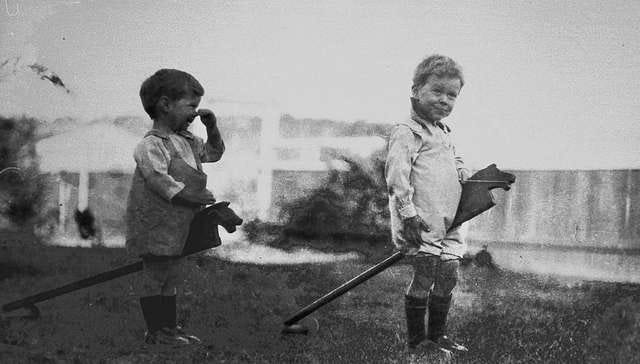
hob‧by / {hɒbi} (plural hobbies)
1. an activity done regularly in one’s leisure time for pleasure and relaxation.
The word hobby comes from hobby horses - a child’s toy consisting of a stick with a horse’s head, going back to the early medieval period. Fast forward to the Tudors, and Henry VIII. He had a stable full of horses that he didn’t use for anything except racing and showing off - not war, not jousting, and not for getting from place to place. They were, derisively, referred to as his “hobbies”. But being derisive about Henry wasn’t a smart move, even behind his back, so the word ended up with its present day positive connotation.1
These days, most of us have hobbies. That’s a luxury many people in the Western world haven’t had throughout large chunks of history. But most of us can find a little time every week to do something we enjoy.
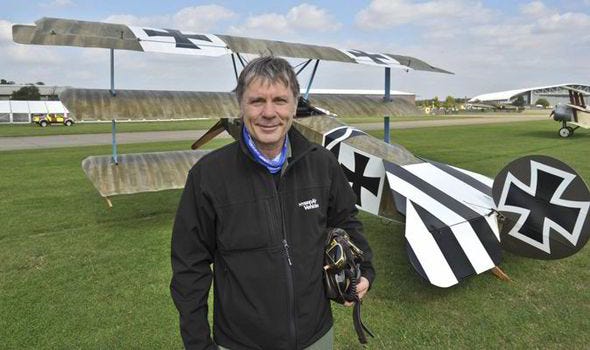
To my mind, someone’s hobbies say a lot more about them than what they do for a living. Work is often just something we do for money, but our hobbies are the things we choose to do because we like them. When I meet someone, I’d far rather talk about what they like to in their spare time than what they do for their job. As a teen back in the 80s, I was fortunate enough to spend time with Bruce Dickinson of Iron Maiden. His one rule was that he didn’t want to talk about music, because that was his day job and he wanted to relax. So instead we talked about WW1 planes and his ambition to own a Fokker Triplane, fencing, Aleister Crowley, toy soldiers, and much more. I like to think it gave me a very different view on who he is outside his stage persona.
But as Briandito Priambodo notes in The Slow Decline of Joy, there’s something insidious happening to hobbies. They’re becoming more and more performative. They’re becoming things we do, not because it’s who we are, but because they’re things we want to use to show people who we’d like to be.
If it’s not posted, was it even real?
If there’s no audience, is there any proof?
There’s also a growing pressure to make our hobbies “useful” and economical. If we’re not doing them for the audience, we should be doing them for the market. Don’t do things for pleasure - monetize them, otherwise you’re leaving money on the table! Publish your stories on Amazon! Put your art on Etsy! Build yourself a little Web site and sell those soaps you like to make! Look, here’s a story about someone who turned her hobby into a business making $40,000 a month - why aren’t you doing the same?
That’s no longer a hobby. That’s a side hustle. (Or, if we’re being blunt, a second job.) That’s not pleasure. That’s work.
Moving the dopamine hit
When we’re focused on the audience or the money rather than the experience itself, it completely changes the nature of what that experience means to us.
When you’re doing something you enjoy for no reason other than the fact that you’re enjoying it, you get a nice, pleasurable jolt of dopamine as a reward. It’s totally self-centered: you do the thing, you enjoy it, you get a buzz.
But if you’re thinking about how you’re going to present this experience to others, you don’t get the buzz from doing the thing, because it’s not yet complete. Instead, you’re worried about getting a nice photo or video of the thing. You can’t fully enjoy the experience itself until you’ve got a satisfactory record of it. As a result, the dopamine hit comes when you say “yes, that’s the one!”
And by then, you may have missed the event itself - you’ve been watching it through a lens. Just go to any gig, and you’ll see people who are too busy staring at their phones, trying to get a video that they will almost certainly never watch. They’re not even looking at the band. In Acadia National Park this summer, I was struck by the number of people who rushed to the scenic outlooks, grabbed a quick selfie or a family photo, and moved on to the next one without even taking time to look around them. They weren’t there to see Acadia: they were there to get photographs of themselves in Acadia.
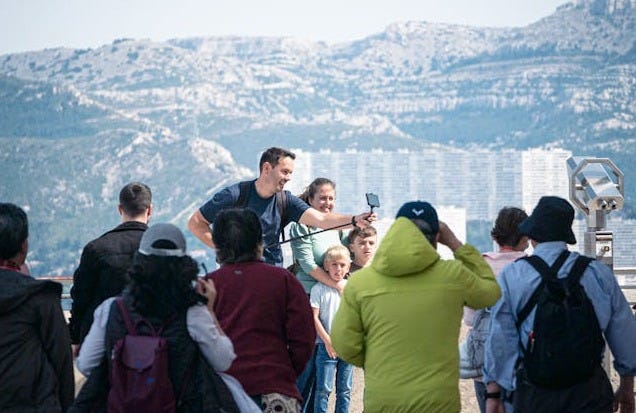
But even that’s not enough. That photo or video doesn’t count until you share it. And more to the point, until you get likes and comments. You’ve got a great photo of yourself in a fantastic location, or of a piece of art you made, or took a cool video at a gig… and then, nothing. Nobody reacts. You feel deflated, and you feel bad about the experience. Macchu Picchu sucked, your art was terrible, and the band were shit. Your perception and your memory of the event has less to do with how much you enjoyed it at the time, and more to do with how other people - possibly complete strangers - reacted to it.
And it doesn’t stop there. After a while, even chasing the likes doesn’t do it. You feel bad if you don’t get them, but they’re not making you happy any more.
“I feel like social media is a party drug that we all started taking 10, 15 years ago in big doses. It was like, this is so fun. And now we’re all addicted to it, and no one’s getting high off it anymore.”
Elizabeth Gilbert, New York Magazine
If you’re doing your hobbies for someone else’s benefit, you’re probably going to stop enjoying them. It’s like what happens when you turn your hobby into your day job - it stops becoming fun, and starts becoming work. (Trust me on this, I’ve done it too many times. I finally learned my lesson when I realized I no longer enjoyed games, books, or films because they weren’t things I did for pleasure.)
It’s okay to do things simply because they bring you joy. Your hobbies should be a sanctuary, a space where the only thing that matters is your own pleasure.
Ignore the pressure to perform, to monetize, or to seek external validation. Put down the camera, close the sales tab, and step fully into the moment. Dive into that quiet, private moment that exists purely for you. Reconnect with the original, pure spirit of the word hobby - a thing done just for fun. Go create, play, and enjoy, just because you can.
I’m not a doctor, dietitian, nutritionist, therapist, psychologist, psychiatrist, meditation trainer, yoga teacher, or anything else. My academic background is in anthropology, and I’ve taken some neuroscience courses, but otherwise I’m self-educated. Nothing in this blog constitutes professional advice.
This may or may not be true. Etymology isn’t an exact science.
Totally love this. I'm going to share it with my writing group on Tuesday because I think too often we struggle with having creative writing as a hobby and feel we should be doing more with it - publishing, entering competitions, sharing it - when actually we could just have it as a hobby we love. Very liberating to move into that mindset. Thank you
I love this. I’ve been thinking along these same lines lately, so this was incredibly validating. 💜